


“Gardening adds years to your life and life to your years“- Author Unknown
Gardening provides an outlet for physical activity towards maintaining and improving overall health. Also, gardening can be practiced by most ages. It is considered a moderate to heavy intensity physical activity. Gardening has the added benefit of engaging the whole body in movement. To prevent illnesses like coronary disease, it is recommended to exercise both the arms and the legs, which gardening involves doing (18).
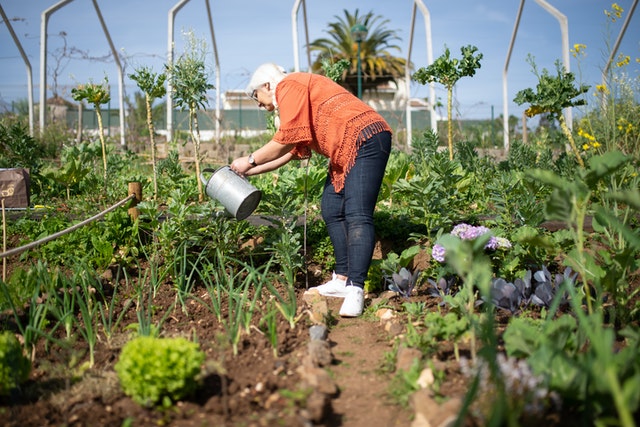
Gardening is increasingly being recognized for supporting healing and wellness. Through gardening tasks and movements such as:
- digging,
- planting,
- pruning,
- lifting, bending,
- stretching,
- weeding,
- raking, and
- and watering
the whole body can get a workout. Through these activities, new muscles in your body are engaged, while helping to build and tone muscles; strengthen bones and stamina; and extend flexibility. Also, gardening is a recommended activity because it can encourage the use of many motor skills, improve endurance and strength and keep you moving. Moreover, these activities increase blood circulation, which aids in lowering blood pressure and speeding up the healing process. Gardening has also been linked to significant reductions in total cholesterol and HDL cholesterol. As such, a person would be more resistant to injuries and has a reduced risk of bone loss, heart disease, diabetes and other diseases (19).
Interestingly, research published in the British Journal of Sports Medicine reveals that gardening can reduce the risk of heart attack and stroke and prolong life by as much as 30 percent among people who are 60 years or older. The study had a large group of 4,000 participants of 60 years of age or older in Stockholm (20). These health benefits that gardening offers appears to derive from the combination of physical exercise and stress reduction that working in the dirt offers (21). What’s more, those choosing gardening as a form of moderate-intensity exercise are more likely to exercise 40-50 minutes longer on average compared to people who choose activities such as biking or walking (22).
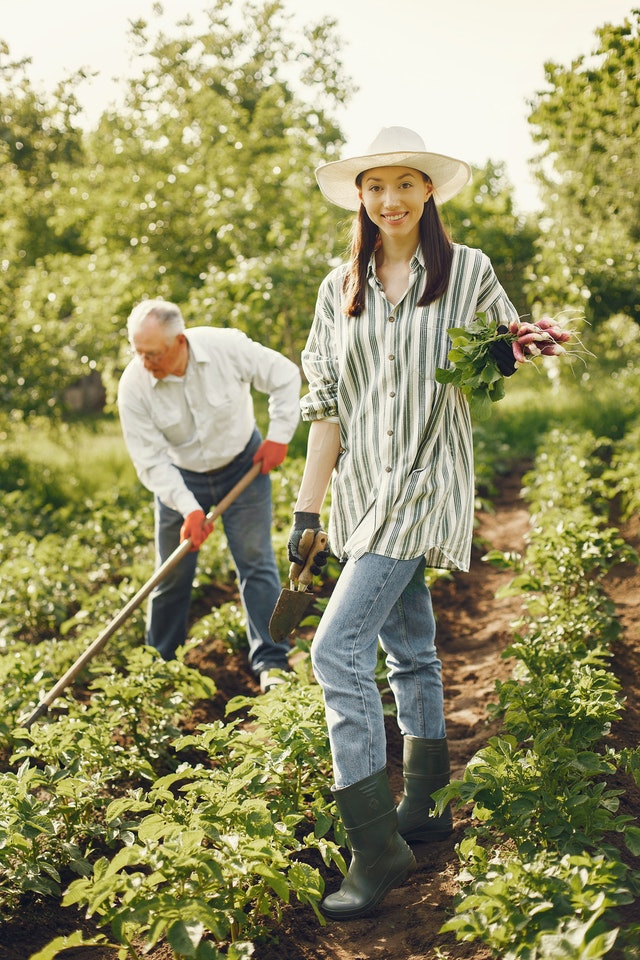
“To forget how to dig the earth and to tend the soil is to forget ourselves”
– Mahatma Gandhi
GROUNDING/EARTHING HEALTH BENEFITS
“Come forth into the light of things, Let nature be your teacher”
– William Wordsworth
Gardening actively involves making a physical connection with the earth – touching the earth and the soil. This particular act can have significant benefits for human wellness. Many people do not access direct contact with the soil with bare skin, particularly on a daily basis or for longer periods of time. The human body is bioelectrical in nature. All of our bodily functions including cells and our nervous system are governed by electric power and pulses of energy. Lack of this contact can lead to a build-up of positive electrons in the human body from electrical energy, electromagnetic frequencies, WI-FI and more. The earth provides a benefit by acting as a ground, just as it does for electrical outlets, reducing the extra positive subtle surface electric charge, and our effortless lifestyle activity that systemically influences the basic bioelectrical function of the body. Our planet also holds an incredible amount of energy. According to the widely accepted dynamo theory, scientists say that electrons and fluids in the earth’s core generate continuous, powerful magnetic forces, complex energy fields, and radiation. Today, some scientists suspect that the earth’s energy cycles and rhythms play an important role in our own bodies’ electrical rhythms, such as regulating our hormone production and sleep-wake cycles
Research now is backing up the significant physical and emotional health benefits of grounding/earthing – simply touching the earth. There have been at least 20 studies since 2020, which have reported compelling evidence of wide and significant physiological improvements when the body is grounded vs. non-grounded. Connecting physically to the earth has several health benefits including:
- stabilizes the physiology,
- reduces inflammation, pain and stress; and
- improves sleep, blood flow and lymphatic/venous return to the hearth and produces greater well-being. (40).
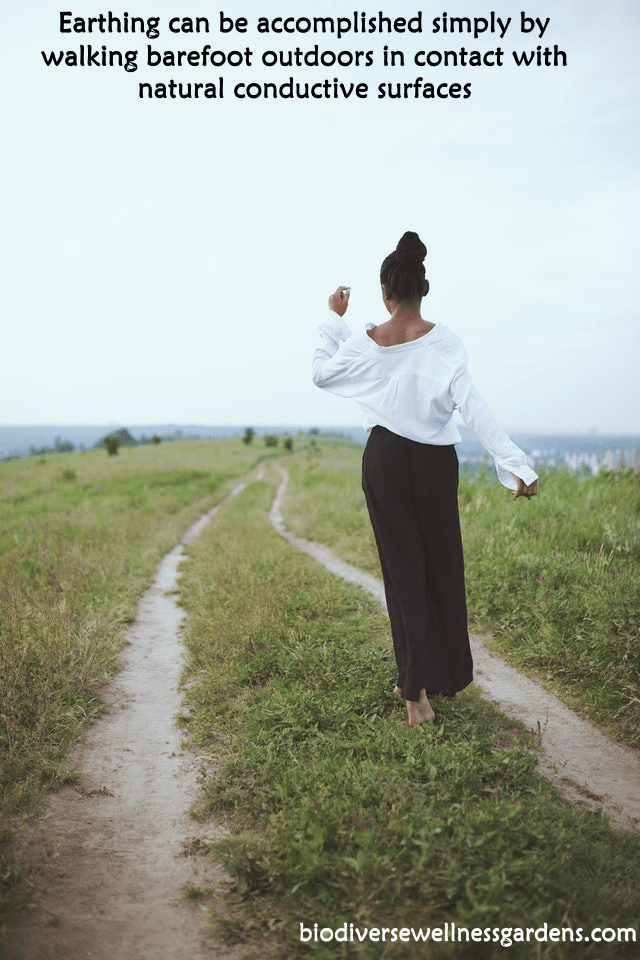
Earthing can be accomplished simply by walking barefoot outdoors in contact with natural conductive surfaces such as: grass, soil, gravel, stone and sand; and/or using inexpensive grounding systems (i.e. grounding mats, pads, body bands or patches) while sleeping or sitting. These practices restore a lost and needed electric connection with the Earth. Similar to the Vitamin D benefits provided by the sun, the Earth directly under our feet provides unique energy and frequencies that directly influence our body. “Earthing restores a primordial electric connection to the Earth lost over time because of human lifestyle. Earthing appears to correct what we call an “electron deficiency syndrome,” an overlooked and likely significant cause of multiple health disorders.” (41) Gillian Mandich, PhD(c), a health lecturer at Western University in London, Ontario says, “[e]ven a five-minute break outside can be an energizing boost! The health benefits of getting outside are cumulative throughout the day, so finding a few times per day to log five to 10 minutes is very beneficial.” Going a step further is simply siting, walking or playing outdoors for 30 to 40 minutes, says energy-medicine expert James Oschman (42).
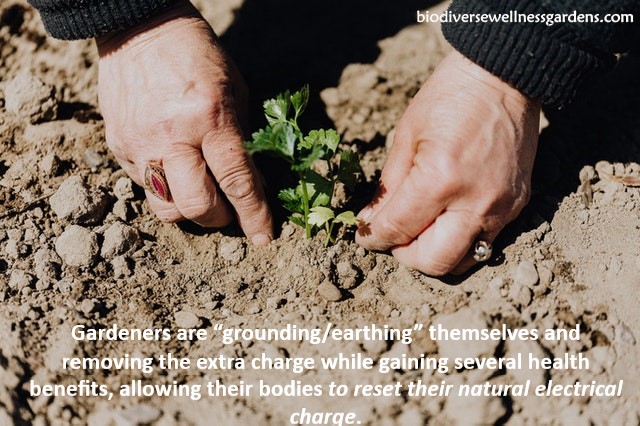
Thus, engaging in activities like gardening where one is touching the earth and can be barefoot in soil and grass etc., gardeners are “grounding/earthing” themselves and removing the extra charge while gaining several health benefits, allowing their bodies to reset their natural electrical charge.
GARDENING SUPPORTS HEALTH WITH WHOLESOME FOOD
“Essential advice for the gardener: grow peas of mind, lettuce be thankful, squash selfishness, turnip to help thy neighbor, and always make thyme for loved ones” – Author Unknown
Not surprisingly, gardening supports good nutrition. Planting fruits and vegetables provides us with the opportunity to eat the freshest and healthiest foods available thereby supporting optimal health. It is a well known fact that consuming more fruits and vegetables and a variety of these supports and optimizes our health. Several studies have shown that gardeners in particular tend to eat more fruits and vegetables than their peers. Children also serve a case in point of the benefits of gardening. Studies of after-school gardening programs suggest that children who garden are more likely to eat fruits and vegetables and are more willing to trying out new foods to eat (43).

As science has demonstrated and how we ourselves have experienced, spending time in nature such as in a nature-based garden, reduces stress, elevates mood, promotes physical and psychological recovery and supports spiritual wellness. In turn, nature-based gardens support biodiversity by creating a habitat for creatures to visit and live in, and plants to feed on, thus fostering the interconnected relationship that we all share on this planet. For more information, check out this website’s tabs on “Gardens and Human Health” and “Biological Diversity.”
With this in mind, the biodiverse wellness garden model was created. It focuses on taking natural elements that support human wellness and biodiversity into designing and creating a garden. Instead of viewing biodiversity and human wellness as separate, this type of garden offers a holistic approach to supporting both wildlife and human wellness.
A customized, comprehensive expert garden plan is available from biodiversewellnessgardens.com. These garden plans are custom designed to meet your vision, needs and budget. This service also designs biodiverse wellness gardens for specific uses. Our key goal is to offer a service that designs a garden, which both humans and biodiversity will enjoy! Please visit the “Contact” tab to connect with us to design your own Biodiverse Wellness Garden!
REFERENCES
18. Williams, Chris. “The Science is In: Gardening is Good for You.” The Conversation. http://theconversation.com/the-science-is-in-gardening-is-good-for-you-65251.
19. Gates, Jane. “Gardening: The Wonderdrug.” June 9, 2014 Fix. https://www.fix.com/blog/health-benefits-of-gardening/
Hayes, Kim. “5 Secret Health Benefits of Gardening.” June 14, 2017. https://www.aarp.org/health/healthy-living/info-2017/health-benefits-of-gardening-fd.html
Andersen Hilton, Charlotte. “10 Surprising Ways That Gardening is One of the Healthiest Things You Can Do.” The Healthy https://www.rd.com/health/wellness/health-benefits-of-gardening/
Evergreen Seeds. “Multiple Benefits of Community Gardens.” https://www.evergreenseeds.com/multiple-benefit-of-community-garden/
20. British Medical Journal. “DIY, Gardening Can Cut Heart Attack/Stroke Risk by 30 Percent, Prolong Life for Seniors.” Science Daily. October 28, 2013. https://www.sciencedaily.com/releases/2013/10/131028184948.htm
Topping, Alexandra. “Gardening as Good as Exercise in Cutting Heart Attack Risk, Study Shows.” The Guardian. October 28, 2013. https://www.theguardian.com/society/2013/oct/28/gardening-exercise-cutting-heart-attack-risk-diy-60-plus
21. Andersen Hilton, Charlotte. “10 Surprising Ways That Gardening is One of the Healthiest Things You Can Do.” The Healthy https://www.rd.com/health/wellness/health-benefits-of-gardening/
22. Darnton, Julia and McGuire, Lauren. “What are the Physical and Mental Benefits of Gardening?” Michigan State University Extension. May 19, 2014. https://www.canr.msu.edu/news/what_are_the_physical_and_mental_benefits_of_gardening
41. Menigoz, Wendy et al., “Integrative and Lifestyle Medicine Strategies Should Include Earthing (Grounding): Review of Research Evidence and Clinical Observations.” Explore. Vol. 16, 2020. P. 152-160.
Duvauchelle, Joshua. “Bare Feet and Bare Soil: Reconnecting with the Earth.” Alive. January 18, 2017.https://www.alive.com/lifestyle/bare-feet-bare-soil/ and (sciencedirect.com)
42. Duvauchelle, Joshua. “Bare Feet and Bare Soil: Reconnecting with the Earth.” Alive. January 18, 2017.https://www.alive.com/lifestyle/bare-feet-bare-soil/
43. Harding, Anne. “Why Gardening is Good for Your Health.” Health.com. July 8, 2011. http://www.cnn.com/2011/HEALTH/07/08/why.gardening.good/index.html
Please support this website by making a donation. Your kindness is most appreciated!
Make a monthly donation
Make a yearly donation
Choose an amount
Or enter a custom amount
Your contribution is appreciated.
Your contribution is appreciated.
Your contribution is appreciated.
DonateDonate monthlyDonate yearly
 BIODIVERSE WELLNESS GARDENS