Wellness, specifically human wellness, is increasingly gaining interest. Historically, wellness has been associated by the absence from disease. So if you weren’t sick, you were considered healthy. While there is not a universally agreed upon definition of wellness today, there are some basic agreed upon ideas on what constitutes this. Unlike the past, today’s idea of wellness is more comprehensive. While there is agreement that the absence of illness is a key component of being healthy, it does not refer to a person’s overall well-being (1).
One comprehensive definition of wellness was developed by Dr. Bill Hettler, co-founder of the (American) National Wellness Institute (NWI). It describes wellness as: “an active process through which people become aware of, and make choices toward, a more successful existence.” The definition and resulting interdependent model describes six dimensions of wellness: physical, social, intellectual, spiritual, emotional and occupational. From this interdependent model, it asserts that:
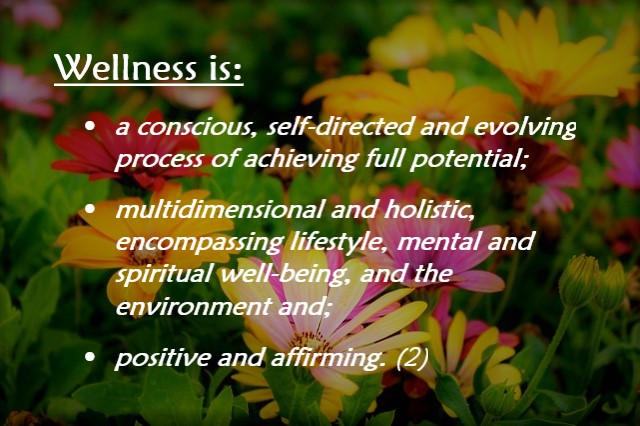
The National Wellness Institute’s wellness model and definition, along with many other ideas of wellness today recognize the whole individual and the multi-dimensional and synergistic aspects of manifesting wellness including the mind, body and spirit, with the understanding that everything we do, feel, think and believe has a direct impact on one’s health.
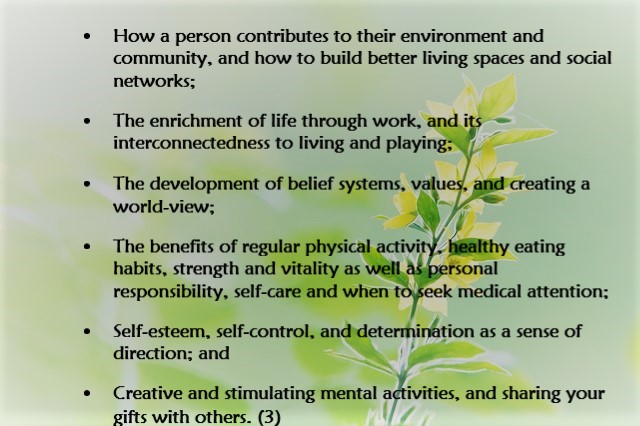
Holistic models such as the Six Dimensional Model demonstrate how to apply wellness as a pathway to optimal living taking into consideration the following:
Throughout history, the botanical world has provided humans’ practical needs such as food, shelter, clothing and medicine. Yet, the botanical world also serves as a place to support and promote wellness in people. Through nature’s healing abilities, the natural environment demonstrates its ability to soothe, revive and regenerate our minds, bodies and souls and foster social and communal bonds. As a human construct of a modified landscape, gardens too have a positive impact on our minds, bodies and souls.
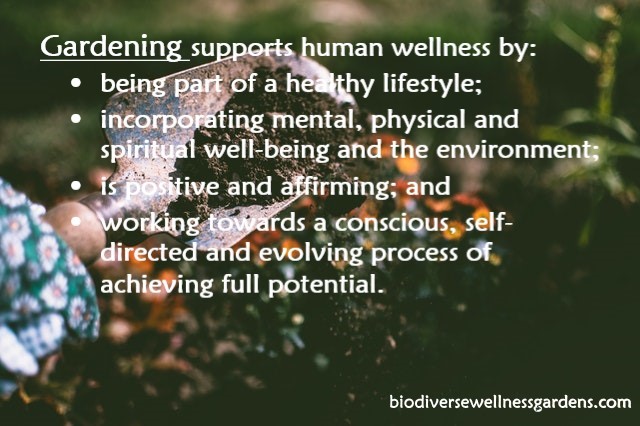
If one considers the National Wellness Institute’s key components of wellness, the act of gardening does work towards meeting these elements. For example, gardening can be part:
As science has demonstrated and how we ourselves have experienced, spending time in nature such as in a nature-based garden, reduces stress, elevates mood, promotes physical and psychological recovery and supports spiritual wellness. In turn, nature-based gardens support biodiversity by creating a habitat for creatures to visit and live in, and plants to feed on, thus fostering the interconnected relationship that we all share on this planet. For more information, check out this website’s tabs on “Gardens and Human Health” and “Biological Diversity.”
This human-nature wellness connection inspired creating this website with its aim to connect people to the wellness that nature provides by bridging the value that gardens offer to support human well-being and the biological diversity of life on earth (biodiversity).
With this in mind, the biodiverse wellness garden model was created. It focuses on taking natural elements that support human wellness and biodiversity into designing and creating a garden. Instead of viewing biodiversity and human wellness as separate, this type of garden offers a holistic approach to supporting both wildlife and human wellness.
A customized, comprehensive expert garden plan is available from biodiversewellnessgardens.com. These garden plans are custom designed to meet your vision, needs and budget. This service also designs biodiverse wellness gardens for specific uses. Our key goal is to offer a service that designs a garden, which both humans and biodiversity will enjoy! Please visit the “Contact” tab to connect with us to design your own Biodiverse Wellness Garden!
CASE STUDY: “THE BLUE ZONES”
A case in point where a comprehensive lifestyle of wellness takes place is in hotspot areas around the
world known as “Blue Zones”. These hotspot areas (Sardinia, Italy; Okinawa, Japan; Loma Linda, California, U.S.A; Costa Rica; and Ikaria, Greece), have been extensively studied for over two decades, and are the source of the world’s healthiest, longest living people on earth. Through decades of researching their medical and lifestyle data, these longevity all-stars have distilled their wisdom on key longevity secrets on how to live a better, longer, healthier and richer life. From these different blue zone areas, there are some key best practices that we all can practice in our current, modern lifestyles. Below are some of the key lessons from these healthy, long and well lived individuals.
- Move Naturally
These longevity all-stars living in these blue zone regions engage in regular, low-intensity physical activity, often part of their daily work routine. Dr. Robert Kane notes that “the data suggests that a moderate level of exercise that is sustained is quite helpful” (Buettner 267). Going a step further, the ideal routine would include a combination of aerobic, balancing and muscle-strengthening activities, comments Dr. Robert Butler (Ibid). The key is sustaining the effort. The overall goal is to form the habit of engaging in 30 minutes (ideally at least 60 minutes) of exercise at least five times a week.
2. Gardening – a low-intensity, physical benefit
One of the activities that most centenarians in the Blue Zones make part of their lifestyle is gardening. “Working in a garden requires frequent, low intensity, full-range-of motion activity through i.e., digging, planting, bending to weed, and carrying to harvest.” As a bonus, gardening helps to relieve stress and you get the benefits of harvesting fresh vegetables and/or viewing beautiful plants to support your well-being and biodiversity.
Other best practices of the Blue Zone centenarians that we can learn to apply to our lives include the following:
1. Cut calories consumed by 20 percent
2. Avoid meat and processed foods
3. Drink red wine (in moderation)
4. Live with purpose – Blue Zone centenarians take time to see the big picture and have a strong sense of purpose.
5. Take time to relieve stress
6. Participate in a spiritual community
7. Make family a priority
8. Be surrounded by those who share Blue Zone values – social connectedness is ingrained into the world’s Blue Zones. Higher social connectedness has been shown in long term studies to lead to greater longevity. (4)
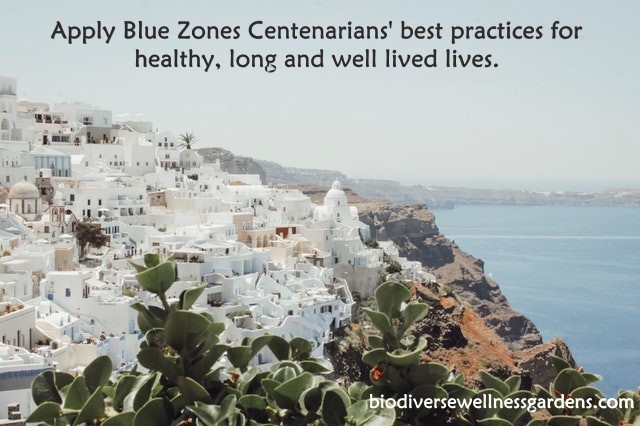
For more information about the Blue Zones best practices and the centenarians studied, read: The Blue Zones: 9 Lessons for Living Longer from the People Who’ve Lived the Longest By: Dan Buettner. You can also check out the Blue Zones website: www.bluezones.com.
REFERENCES
1. National Wellness Institute. “The Six Dimensions of Wellness.” https://nationalwellness.org/resources/six-dimensions-of-wellness/
2. Ibid.
3. Ibid.
4. Buettner, Dan. The Blue Zones: 9 Lessons for Living Longer From The People Who’ve Lived the Longest. 2nd Edition. National Geographic Society: Washington D.C, 2012, p. 267-294.
Please support this website by making a donation. Your kindness is most appreciated!
Make a monthly donation
Make a yearly donation
Choose an amount
Or enter a custom amount
Your contribution is appreciated.
Your contribution is appreciated.
Your contribution is appreciated.